Early History of Photography
Photography has be around for over 200 years now since the first invention of the photographic camera, and in the following post i will be explaining a bit more about the history of photography from the grey scale photos of yesterday to the full 4k full colors digital photographs of today.Around 1800 Thomas Wedgwood made the first reliably documented, even know was unsuccessful attempt it was the breakthrough that got were we are today and 20 years after Nicephore Niepce finally succeeded but the camera was required to be several days in exposure and the early results was very rough.
Letters to his sister in law back in 1814 shows that he succeeded in capturing small images on silver nitrate after a lot of experimenting but the images were capture in negative so he started to make experiments with substances that could be affected by light (M.Stokstad, et al(2005))

This is the world's earliest surviving camera photograph, 1826 or 1827 Its a view from the window at Le Gras this photograph was taken to Francis BGauer shortly before Nicephore's death in 1833.
In 1839 John Herschel made the first negative glass, the the process was far to difficult to reproduce. Janez Puhar invented the first process for making photographs on glass in 1841 and his invention got recognized June 17, 1852 in Paris by the Academie Nationale Agricol, and in 1847 Nicephores Niepce's cousin the chemist Niepce St.Victor, published the invention of making glass plates with albumen emulsion.
Later in time this was replaced by the Collidion process and photographic emulsion processes that would use wet plates that changed the exposure time from 2 hours to only 15 minutes but it was required for the film to still be wet which made portable darkrooms a big necessity until the development of tannic acid.
The Transition to a colour photography
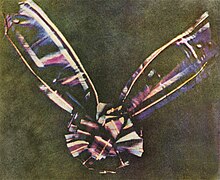
 Louis Ducos du Hauron and Charles Cros were two french inventors that developed the method for producing a coulour photograph in 1869 by taking 3 different photographs in red, green and blue and with those photographs they were allowed to produce a full colour print out on paper. And from this method created by the french inventors autochrome plates were developed and commercially introduced in 1907 by the Lumiere brothers, instead of using three separate photographs you would only need to take one ove a mosaic of colour filters ovelaid on a emulsion.
A new era was began with the invention of a Kodachrome film, and was available for 16 mm home made movies in 1935 and 35 mm slides in 1936.
It was very time consuming and expensive and it could only be done with still photography or landscape photographs
Different applications of photography
- Sports Photography
- Advertising Photography
- Photo Journalism
Sports Photography
Sports photography its a genre in the photography industry that covers all kind of sports.
In majority of the cases the sports photography is mainly used for magazines or for editorial purposes.
The photography is also used in sports websites for e.g BBC sport or sky sports.
 The photographer goes to a football game or it could be a F1 race and he will take many pictures of the players/drivers and of course also pictures of the crowd, stadium/track, of the staff and other things that will be related to its article.
The main skills that are involved in been able to shoot in a sports big event, the photographers needs to be able to capture the action of the event and take action shots and be able to show the emotional in the players facial expressions.
Sports photography is about timing, you need to know enough about the sport genre that you will be taking part as a photographer, because you need to be able to determine when the peak of action will occur, you need to be able to predict when the exiting and magic moments that will excite the fans will occur. The sports photographer needs to learn who the starts and they main people are because this may help you to have a great reaction.

Advertising Photography
Advertising photographers they are the people that need to produce images that will support a marketing idea that will answer to the client brief given to the photographers.
The photographer till take photographs that will help describe and sell the product or idea that they are photographing.
Photography became a vital part of the advertising industry, and its mainly used to advertise a product in billboards on side of buses, bus stops etc.
 Its a very powerful way of advertising a product, because usually is one of the first things someone sees when they see an advertisement. The photographers have to be very clear with the message they are tying to send when photographing the images for an advertisement, they have to be able to tell exactly what the company wants, they got be able to make a photo that will help to sell the clients product. Unlike in TV adverts, the client only have one image to try to sell their product so the photographer has to be very good to be able to make that one image that will help to sell the product.
Photo Journalism
 |
| Albert Einstein, by Lucien Aigner, Princeton University 1941, Museum no. E.267-2003, Given by John and Judith Hillelson © Lucien Aigner Trust |
Henri Cartier Bresson is held my some to be the father of modern photojournalist, although this tittle has been also applied for other photographers such as Erich Salomon, whose candid pictures of political figures were novel in the 1930s
Photoshop and Digital photography
In 1975 Steven Sasson developed the first digital camera using new CCD image sensor chips, he was a engineer at Eastman Kodak. The chips were developed over two years prior by Fairchild. Based on the old Mars Flyby spacecraft cameras it took 23 seconds to capture its first image with a resolution of only 0.01 megapixels.
In 1990 the first commercial digital camera was introduced and it was called Logitech Fotoman or The Dycam model 1, the digital camera stored pictures digitally and it could be connect to a computer in order to download the pictures.
With the ability for photographs to be stored and loaded into a computer it became so much easier to manipulate. It allowed to edit photos and the ability to undo changes and make many copies without increasing the costs. It was needed a program to alter the photos which lead to the development of photo editing software, the most commonly used was the Adobe Photoshop, not just back then but in nowadays still the most common used software to manipulate photos.
Photoshop was developed by Thomas Knoll in 1987 and distrusted by the Apple computers in 1990 and was a cheaper alternative for photo editing software such as Scitex which costed several hundreds of pounds just to use for an hour, so it was only used by professional companies due to its cost. The photoshop allowed people to edit, to correct colour, crop the image to size and undo the changes, but it was very time consuming.
In 1990 the first commercial digital camera was introduced and it was called Logitech Fotoman or The Dycam model 1, the digital camera stored pictures digitally and it could be connect to a computer in order to download the pictures.
With the ability for photographs to be stored and loaded into a computer it became so much easier to manipulate. It allowed to edit photos and the ability to undo changes and make many copies without increasing the costs. It was needed a program to alter the photos which lead to the development of photo editing software, the most commonly used was the Adobe Photoshop, not just back then but in nowadays still the most common used software to manipulate photos.
Photoshop was developed by Thomas Knoll in 1987 and distrusted by the Apple computers in 1990 and was a cheaper alternative for photo editing software such as Scitex which costed several hundreds of pounds just to use for an hour, so it was only used by professional companies due to its cost. The photoshop allowed people to edit, to correct colour, crop the image to size and undo the changes, but it was very time consuming.

No comments:
Post a Comment